Foundations
$249
16 sessions, the Toolkit, four bonus masterclasses, the Manuscripts.
Not a workbook. Not a summary. Two complete sermon manuscripts from John Mark Comer and Jon Tyson's notes and the 59 slides he built from them, scanned exactly as they went into the pulpit, with every seam, movement and story cue labelled so you can see how a sermon is built by people who build one every week.
Most preaching books stop at principles. Here you watch two preachers apply them to a hard text, with the parts that didn't make the cut still visible.
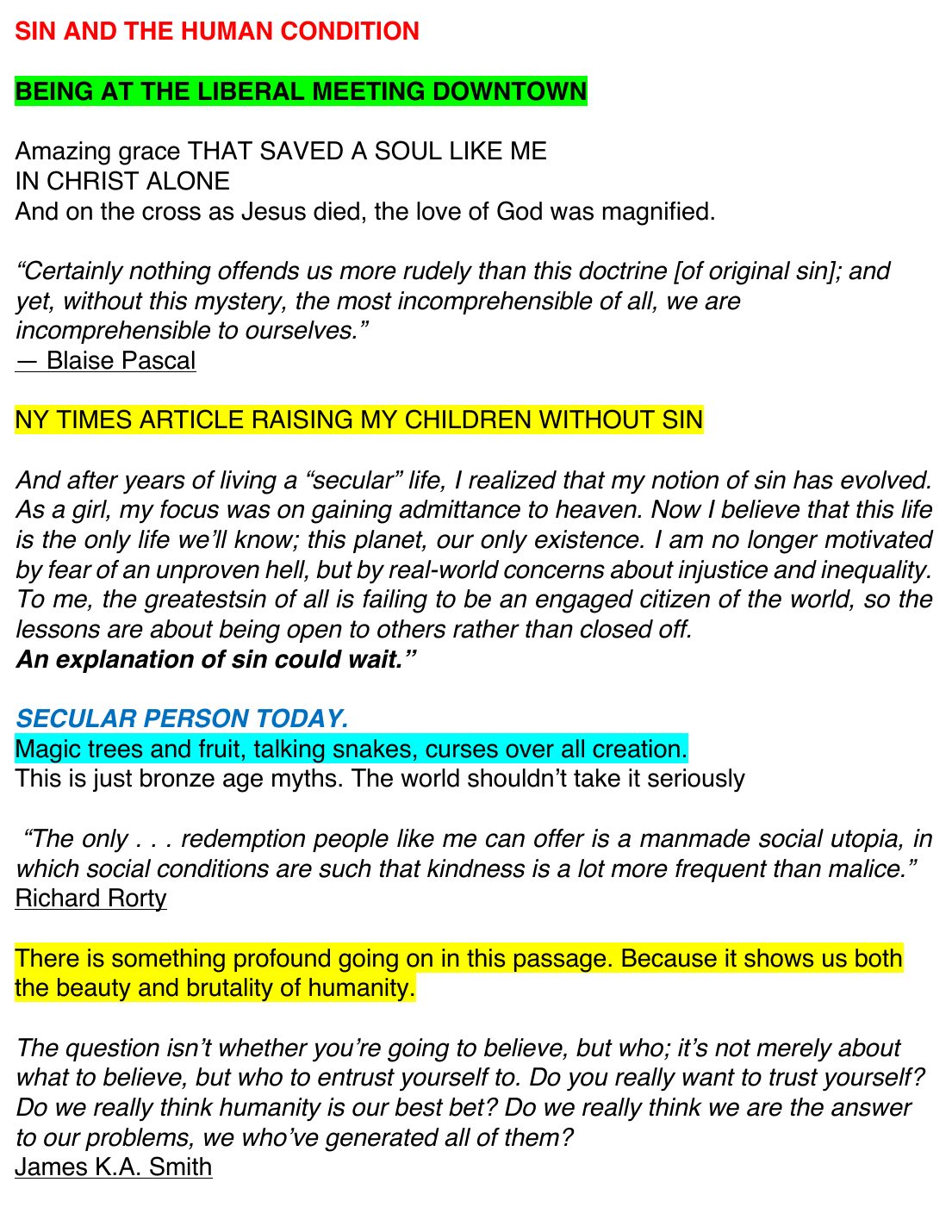
John Mark's two full manuscripts (2 Corinthians 10 and Mark 9). Jon's notes on Genesis 3 and the slide deck he built from them, page for page.
One for each man's system: what the colours mean, what the labels mean, why a quote is underlined and a story is highlighted.
Take one of your own sermons and mark it the same way. Find the seams. Count the stories. See how much of the page is actually the point.
Jon doesn't write sentences for Sunday. He writes cues. Every colour on this page tells him what to do with his voice and his body when he gets there.
Not the story itself. Six words that put him back in the room. He tells it from memory, which is why it lands.
One sentence per movement is highlighted. If the sermon runs long, these survive and everything else goes.
The secular listener gets named and quoted fairly before Jon answers. The cyan highlight is the exact phrase he will say in their voice.
Pascal, Rorty, James K.A. Smith. Underlined means read it word for word and say who said it.
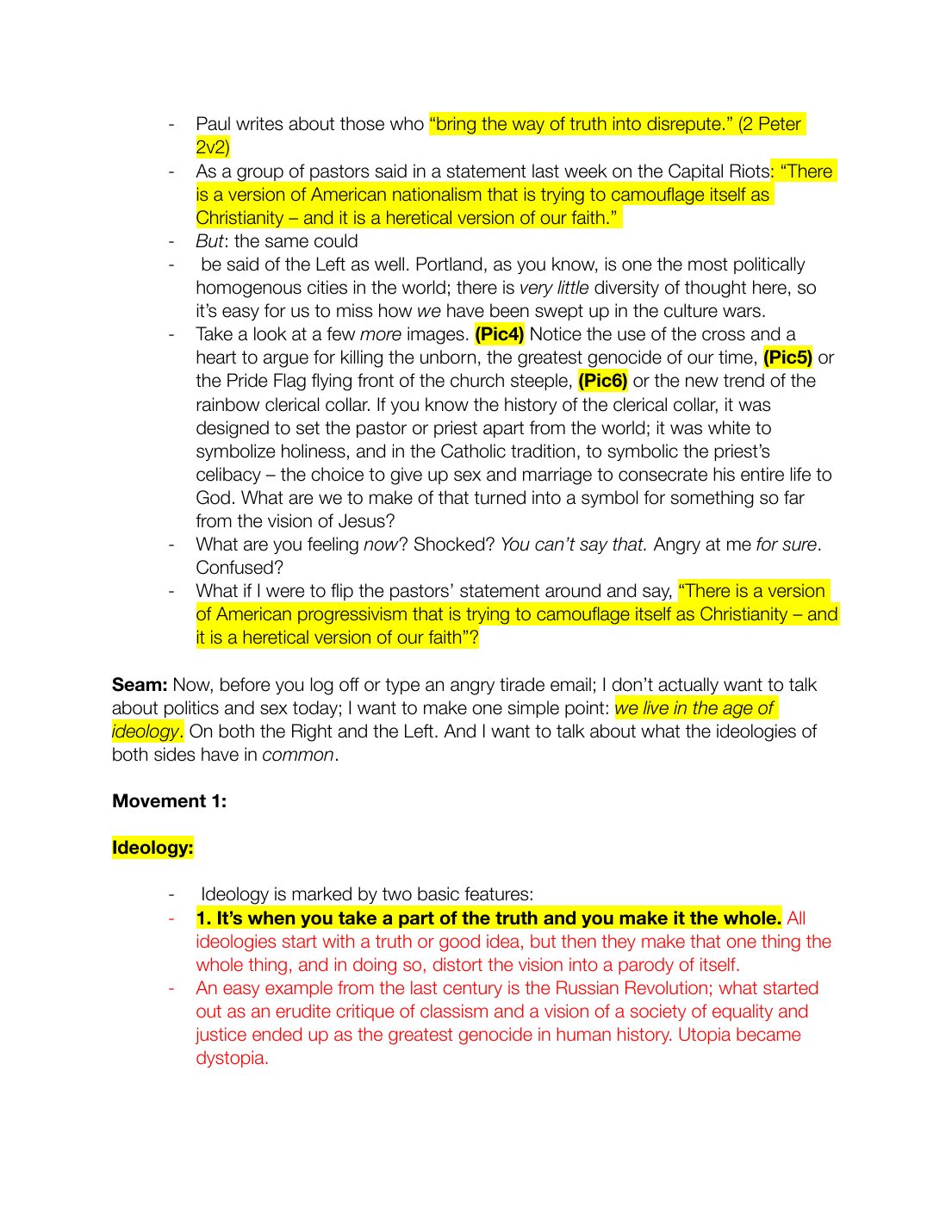
John Mark writes full sentences, then labels the architecture. The labels are what Foundations teaches: hinges, seams, movements. Here they are on a page that was actually preached.
Every quotation he will read aloud is yellow. Everything not highlighted he may paraphrase or skip.
Slide cues inline with the text, so the words and the screen never drift apart. Nothing is left to memory.
The sentence that carries the room from one movement to the next. He names it, writes it in full, and never improvises it.
The first of the sermon's three movements begins here, two pages in. Everything above it was the setup the text needed.
The one claim the movement rests on, in red, in bold. The rest of the page exists so this sentence can land.
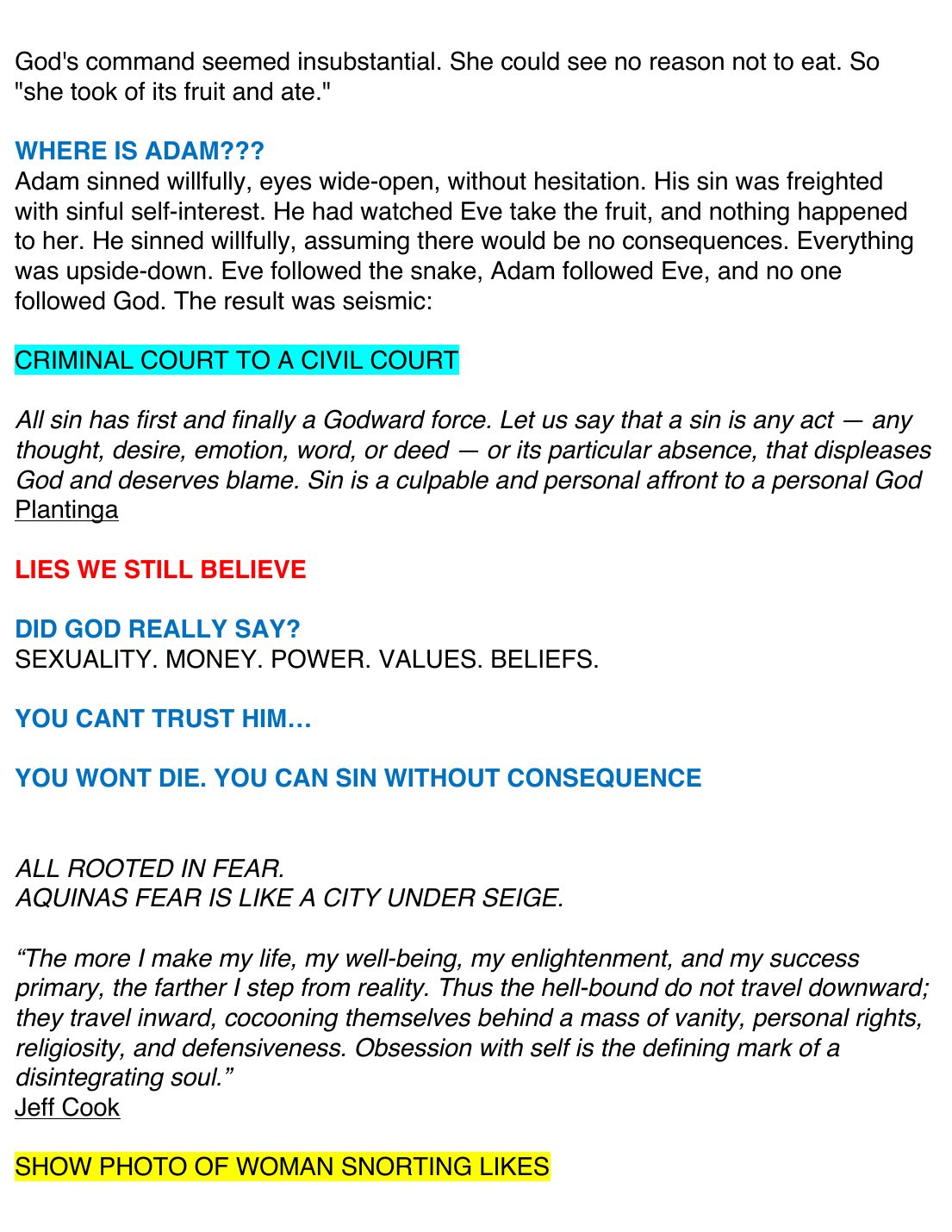
The slide deck in the bonus is the one Jon built from these exact notes, so you can lay them side by side and see what made it onto the screen and what stayed in his mouth.
“Criminal court to a civil court.” A phrase, not a sentence. It becomes a slide. The explanation stays on the page.
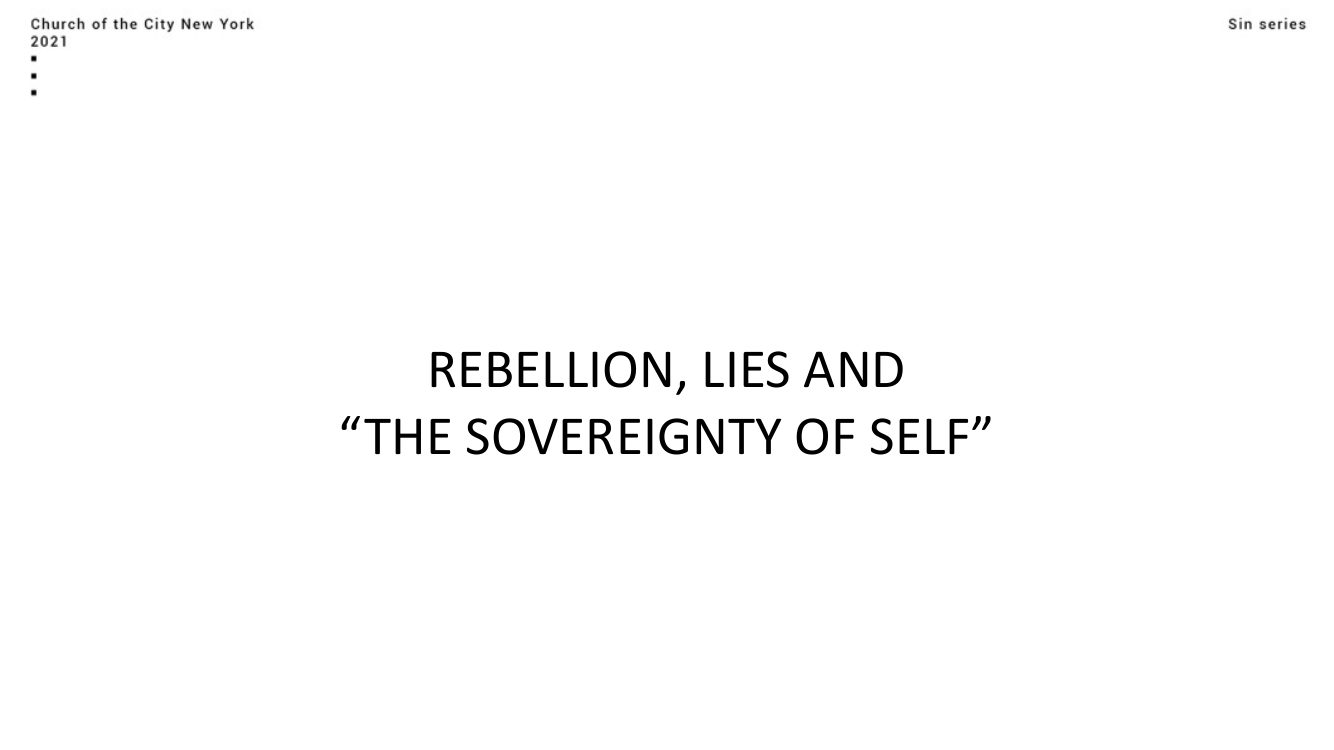
“Lies we still believe” is the spine of the back half. On the slides it becomes “Rebellion, Lies and the Sovereignty of Self.”
Four lies, four blue lines, one slide each. Reading the page you can predict the deck.
“Show photo of woman snorting likes.” The illustration is a cue to the tech team, not a paragraph. Watch how little text it takes.
Foundations, All-Access, the upgrade and every Black Friday offer. It is delivered inside the course the moment your payment clears. After December 1 it comes off the table.
16 sessions, the Toolkit, four bonus masterclasses, the Manuscripts.
Foundations plus all three Studios and every workbook, the Manuscripts.
Preach two sermons with it. If it hasn't made your prep clearer and your weeks lighter, email us for a full refund. Keep the pages.
101 pages. A legend for each preacher. Five exercises to run on your own sermon. Included through December 1.